
ELROB 2026: Notes from the Largest Field Robotics Trial Europe Has Ever Seen
Twenty years in, 21 teams, five scenarios — and a military base that felt more like a family reunion than a competition.

I’m glad I discovered this event and decided to attend. Unlike the polished, rehearsed demonstrations often seen on trade show floors with branded backdrops, ELROB embodied a different spirit. It’s about robots navigating through mud, engineers immersed in their machines with cables and focus. It was a compelling experience, and I’m pleased I finally found out about it and went.
What ELROB Is (and Isn’t)
ELROB — the European Land Robot Trial — is a biennial field robotics event that has been running since 2006. This year’s edition, held at the Waffenplatz in Thun, Switzerland, from June 15–19, was the 13th installment and, by participant count, the largest in the event’s 20-year history. 21 teams. Five scenarios. A military training area that, at roughly 6.5 square kilometers, is the oldest and largest of its kind in Switzerland.
It is worth saying clearly what this is not. It is not a trade show. The framing from ELROB’s initiator, Dr. Frank E. Schneider of Fraunhofer FKIE, has been consistent since day one: ELROB is not a competition in the DARPA Grand Challenge sense. There are no official podiums. The goal is to test what’s actually possible, expose what isn’t, and close the loop between military users, researchers, and industry in a direct and practical way. The 2026 edition was hosted by armasuisse Wissenschaft und Technologie, Switzerland’s Federal Office for Armament.
After the event, Fraunhofer FKIE summarised it with a quote that landed well:
“It was a big family meeting.”
Those words came from Dr. Schneider himself. Twenty years in, that description still fits.
📸 All event photography by Fabian Vogl / Fraunhofer FKIE
📸 And some photos credited to their owners.
Getting There
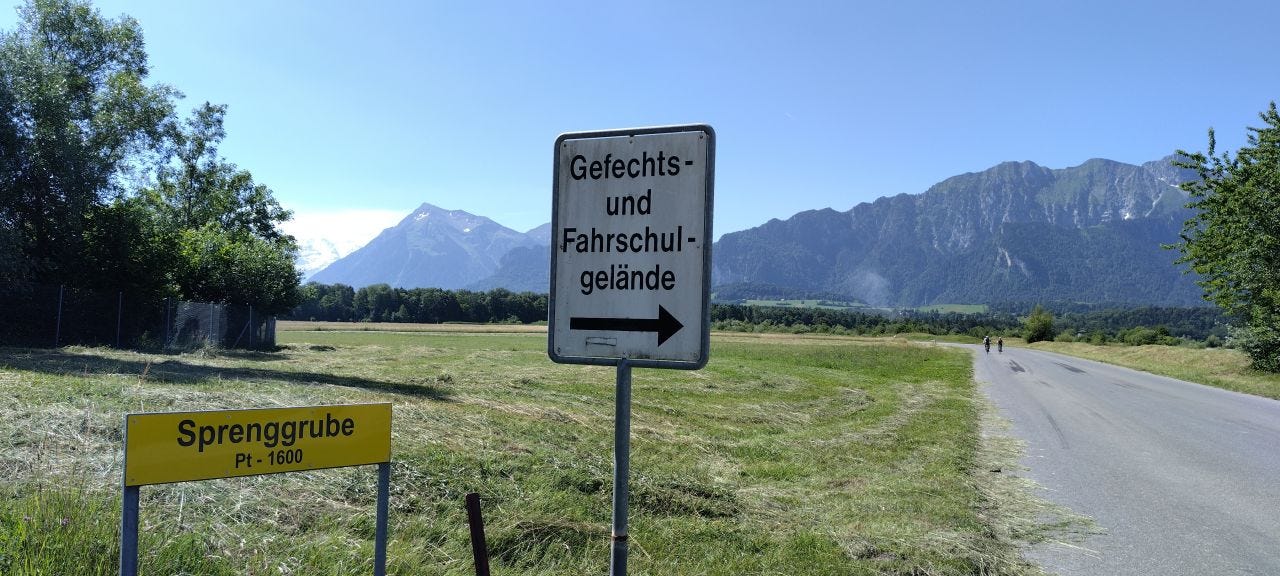
How does one actually register for ELROB? It’s simpler than you might imagine, but you can’t just show up and expect everything to be easy. Registration is handled through Fraunhofer FKIE, with a hard deadline of January 31st each year. Teams fill in a team application (including a liability statement and photograph/video release form), a vehicle specification sheet, and a team membership roster. Media and visitor registrations are separate tracks.
As a visitor, the key thing to know is that you have to register in advance. There is no walk-in gate. The event takes place on an active military base. But once in, the communication and hospitality from the organizing team — local lead Thomas Nussbaumer from armasuisse received several public mentions for exactly this — were warm and professional. The venue also hosted an accompanying exhibition on the opening Monday, where teams and exhibitors could showcase systems in a less-pressured environment.
Communication from the organizers before the event was clear and informative, with none of the noise that often surrounds large technology gatherings. Noise, as one of the people I spoke to noted, is not the motivation for this gathering.
What I Saw
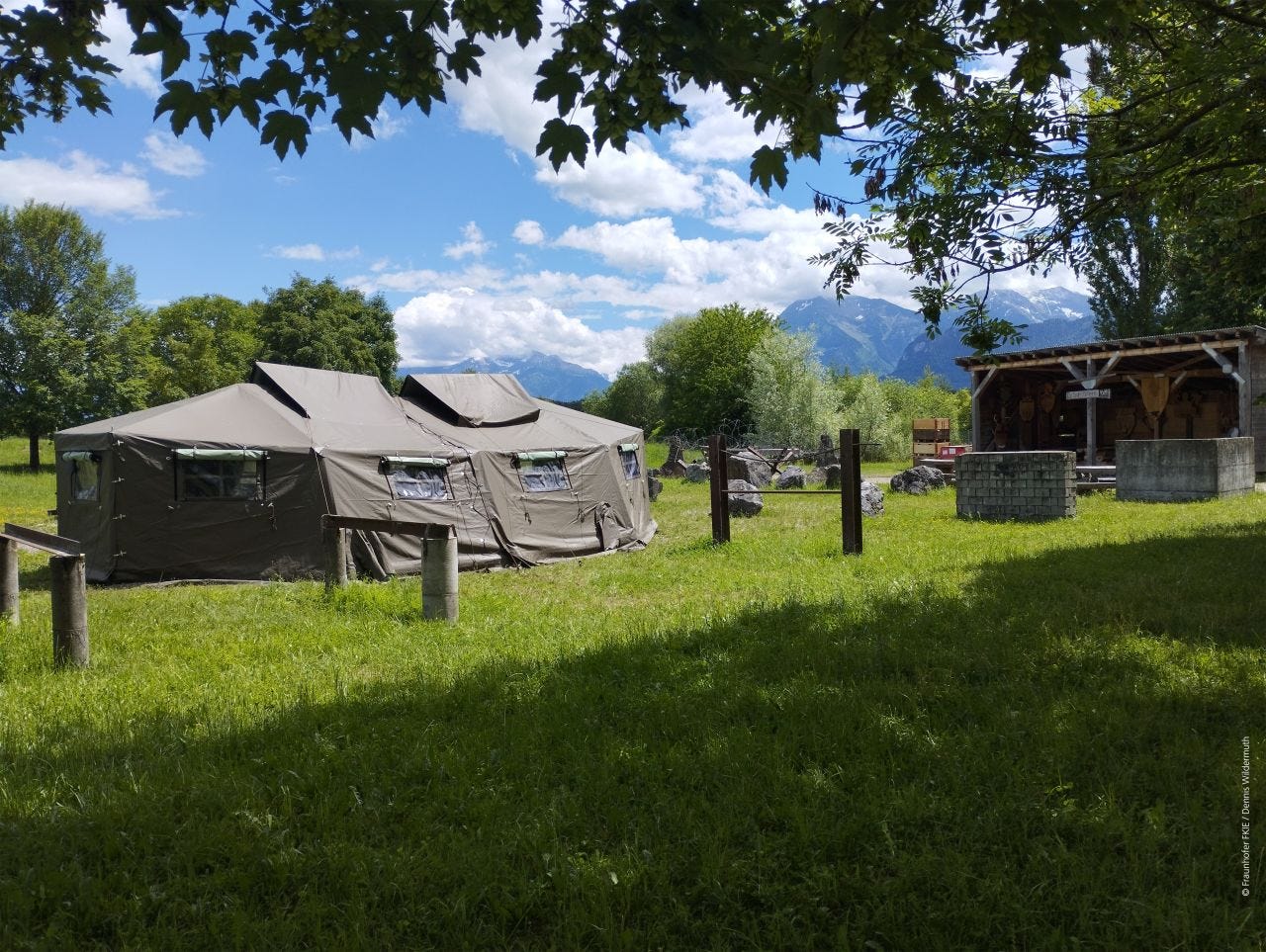
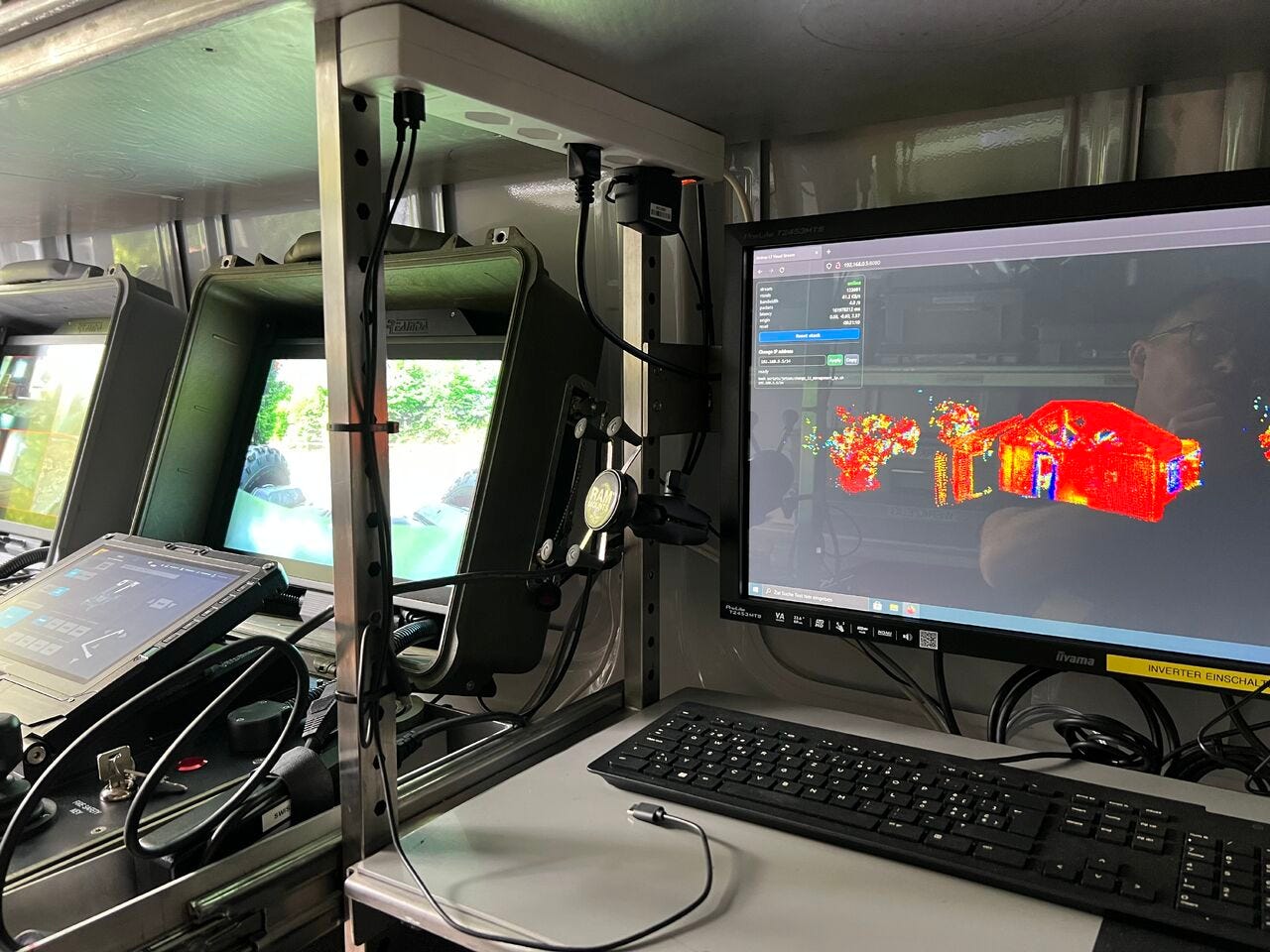
The trial ground during preparation days was what I can only describe as an open-air co-working space for field robotics. Tents were set up like workstations. Between improvised workshops, pallets of water, and equipment crates, teams ran cables, debugged systems, and prepared for their time slots. All types of robots were present — quadruped, wheeled, tracked, palleted, small, medium, and large — and their handlers were connected to them, tethered or otherwise, practicing before the scenarios began.
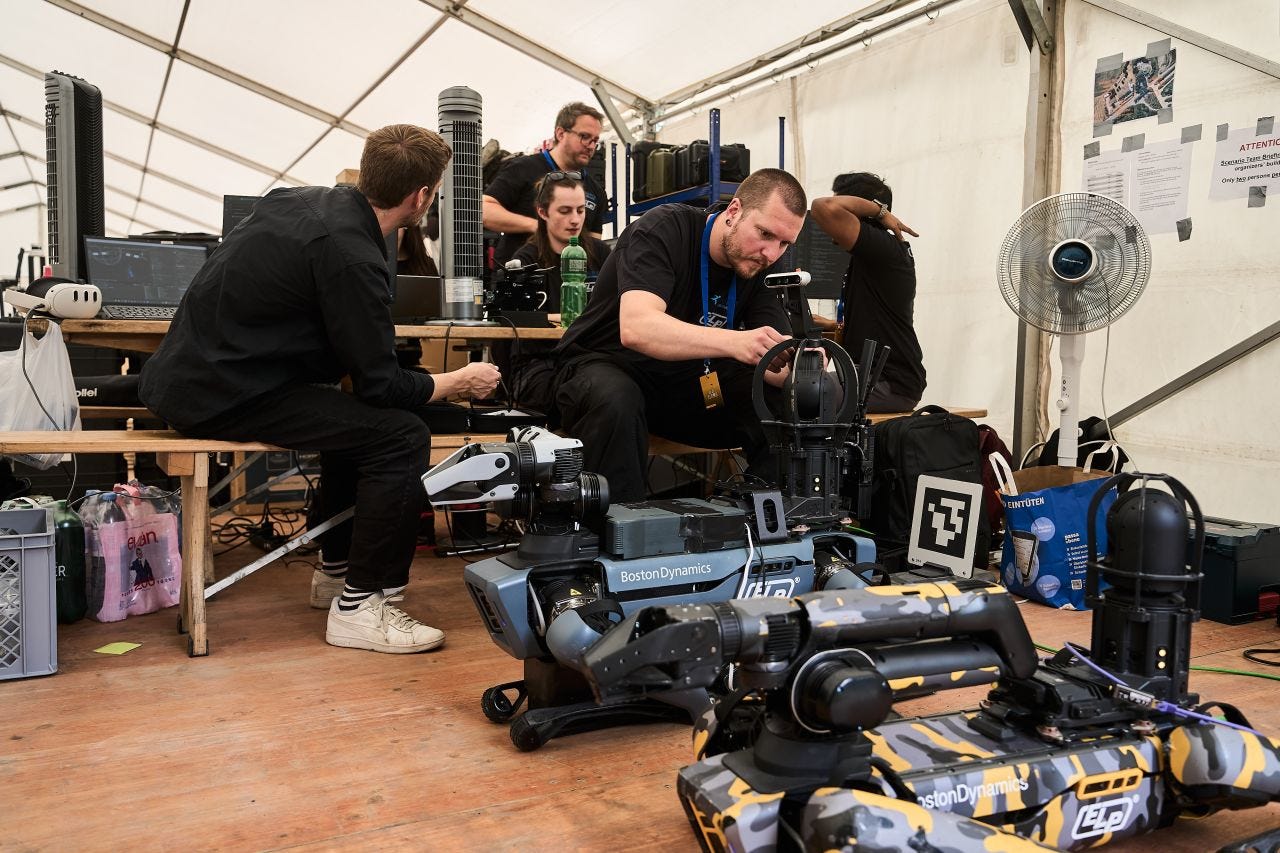
Some faces I recognized from entirely different contexts — polished automotive conferences, clean booths, controlled demonstrations. Seeing those same people crouched over robots in a field, in the heat, with dust on their hands, was a different thing entirely. The scenery changes people. Or maybe it just reveals them.
Walking that trial ground — the drills, the infrastructure, the institutional weight of it — took me somewhere I hadn’t expected to go. ELROB is a civilian-scientific event, but it lives inside a military reality. That tension is not something you feel at trade shows.
The Scenarios and the Winners
Five challenges ran across the week. Here’s a brief sketch of each, followed by who came out on top.
Convoy asked teams to have an autonomous vehicle follow a crewed lead vehicle across challenging terrain. Rheinmetall’s Mission Master, powered by Rheinmetall’s PATH‑Autonomy Kit (PATH‑A), won this category. Their system had already taken first in the 2024 Convoy scenario in Trier — and repeated here. Their LinkedIn post was notably matter-of-fact:
“Strong performance — and a great reflection of the work behind the scenes.”
That’s the right register for ELROB.
Reconnaissance required teams to search the terrain and build detailed situational awareness, including detection of objects of interest.
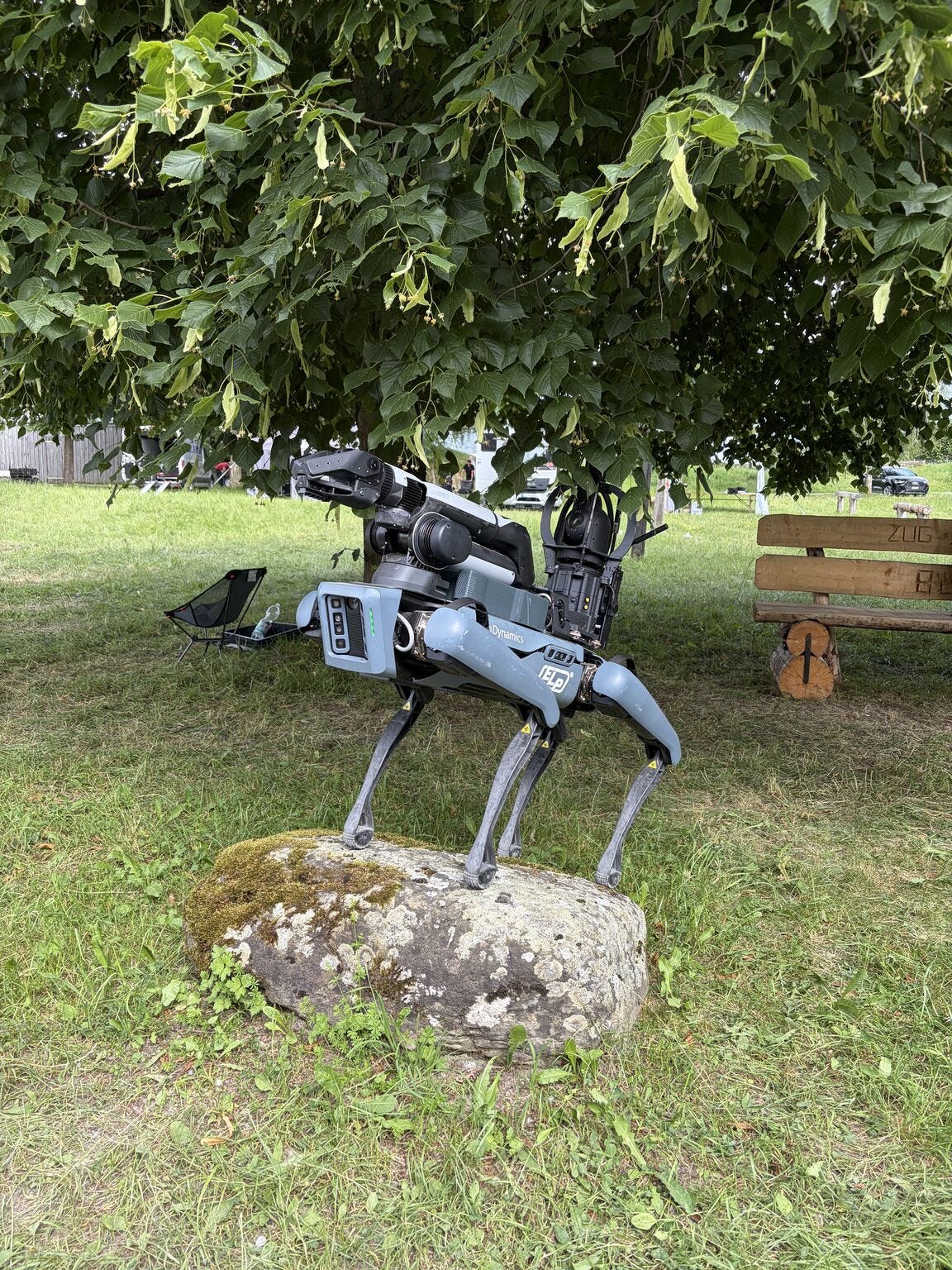
The joint team of ELP GmbH, European Logistic Partners and Roboverse Reply took the win — and also received an award for greatest team effort, after lending their Persistent Systems MPU5 mesh radio to Team Capra when their communications failed.
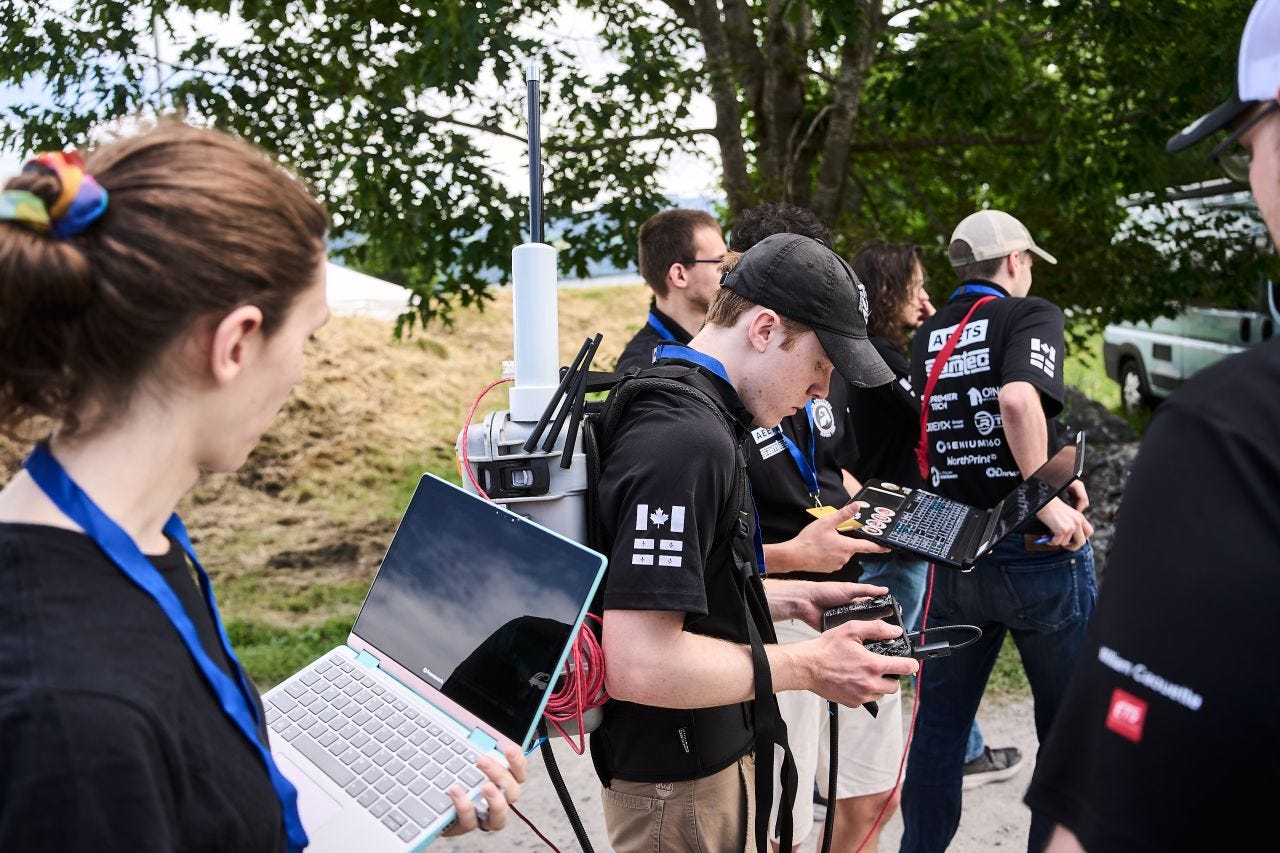
ELP executive Alexander Maus’ post-event reflection was a very honest read: they won, and still used the moment to articulate what events like ELROB are actually for — the audience sees a functioning system and a result; the developers see every module that wasn’t finished, every assumption that got challenged, every gap that still needs closing. Both perspectives are true, he wrote, and that tension is exactly the point.
Mule — the most popular scenario this year, with the largest number of participating teams — involved training a robot on a route and then sending it on as many autonomous round-trips as possible within 40 minutes, including a final data upload.
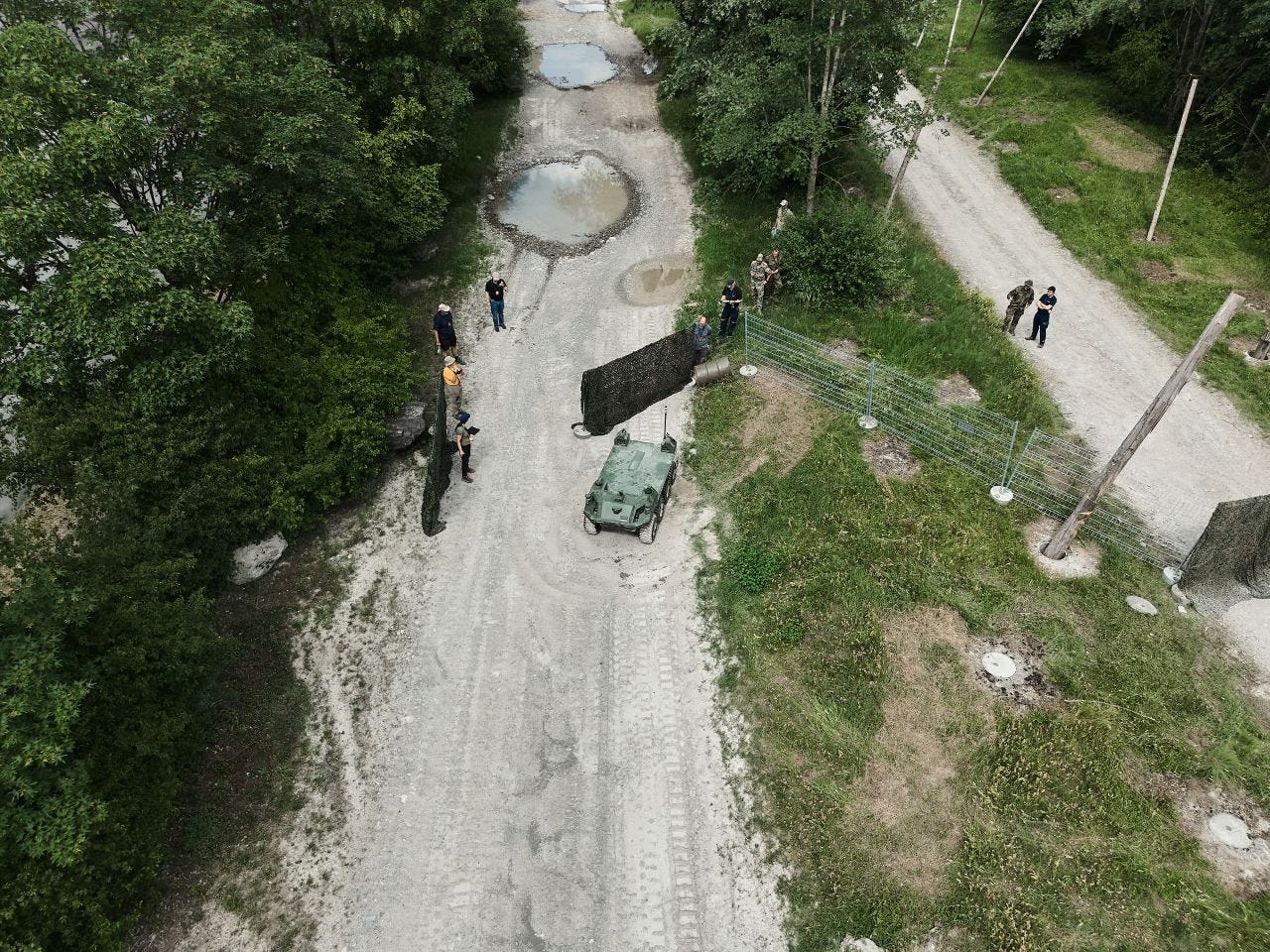
Diehl Defence won. But the Mule stories were not just about the winner. Read more to find out.
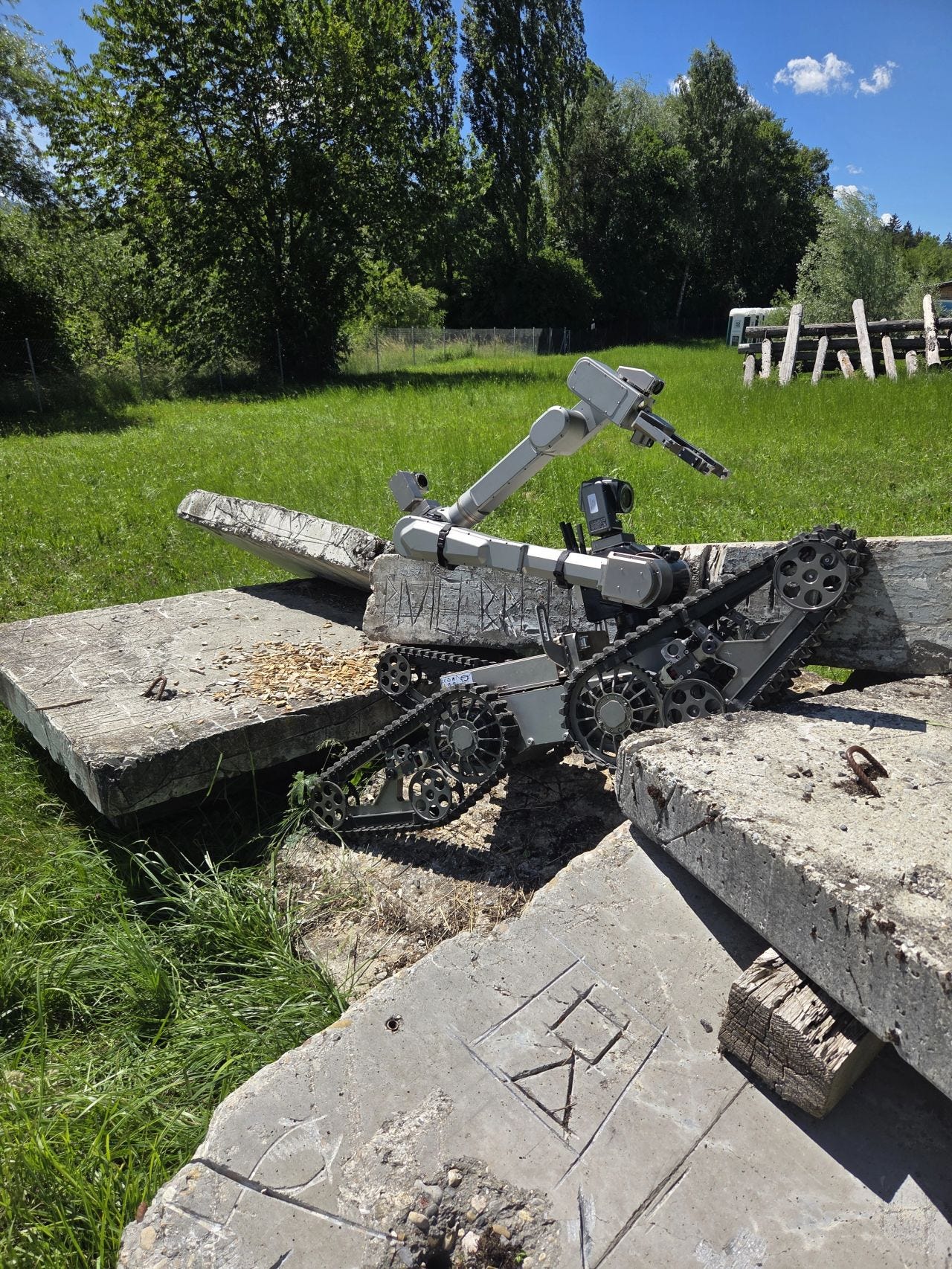
CasEvac / Search & Rescue tested robots’ ability to locate and recover casualties from difficult environments.
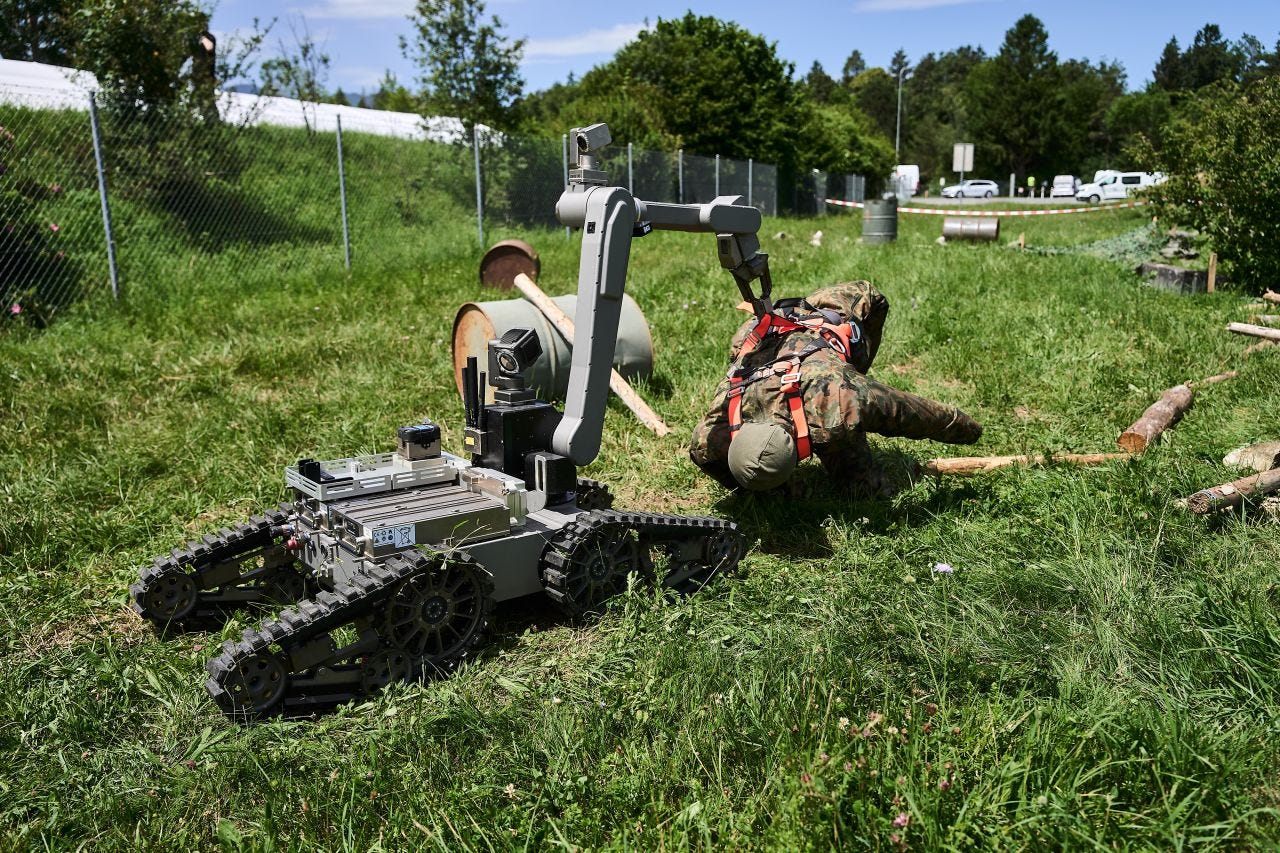
Telerob won with their Telemax EVO PLUS. The week also reinforced something the team took seriously: military users were direct about what solutions they needed, and how fast they needed them.
ERW (Explosive Remnants of War) — no separate winner was announced publicly beyond the ELP/Roboverse win, covering both Reconnaissance and ERW jointly.
The Mule in Detail — What I Missed and What Others Reported
I had planned to attend the Mule scenario on Wednesday and Thursday, but couldn’t make it. So here is what I gathered from the teams who were there.
The setup is deceptively simple: the UGV first follows a human operator to memorize a route, then navigates it back independently, then runs it again autonomously — managing barbed wire, dead ends, and watercourses along the way. Teams get a 15-minute preparation window immediately before their run, and the exact mission parameters are disclosed only then.
Eleven teams entered this scenario, making it the most contested discipline of the week.
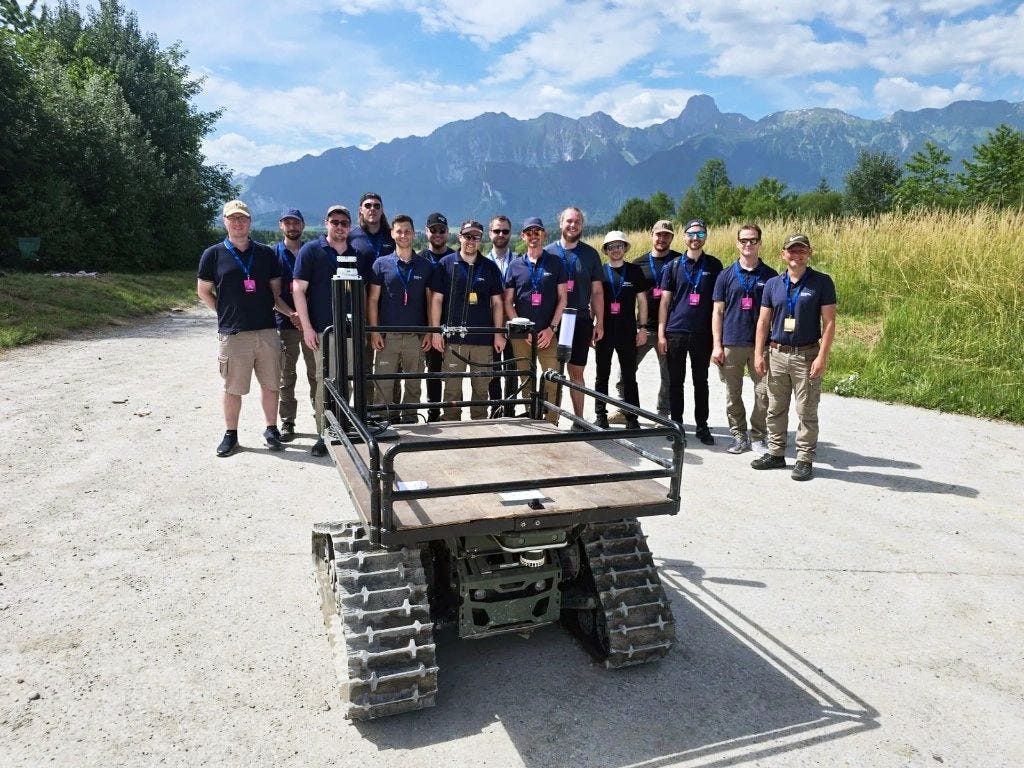
Diehl Defence won it — for the second consecutive time. Their ZIESEL UGV, fitted with the PLATON Autonomy Kit, outperformed ten other teams in Thun, having done the same in Trier in 2024. Back-to-back wins in the most popular ELROB scenario, against a growing field, are not a footnote.
But the field itself was the story.
Poland’s Łukasiewicz – PIAP brought their PIAP IBIS TRANSPORT platform to the Mule, implementing autonomous supply transport in demanding non-urban terrain.
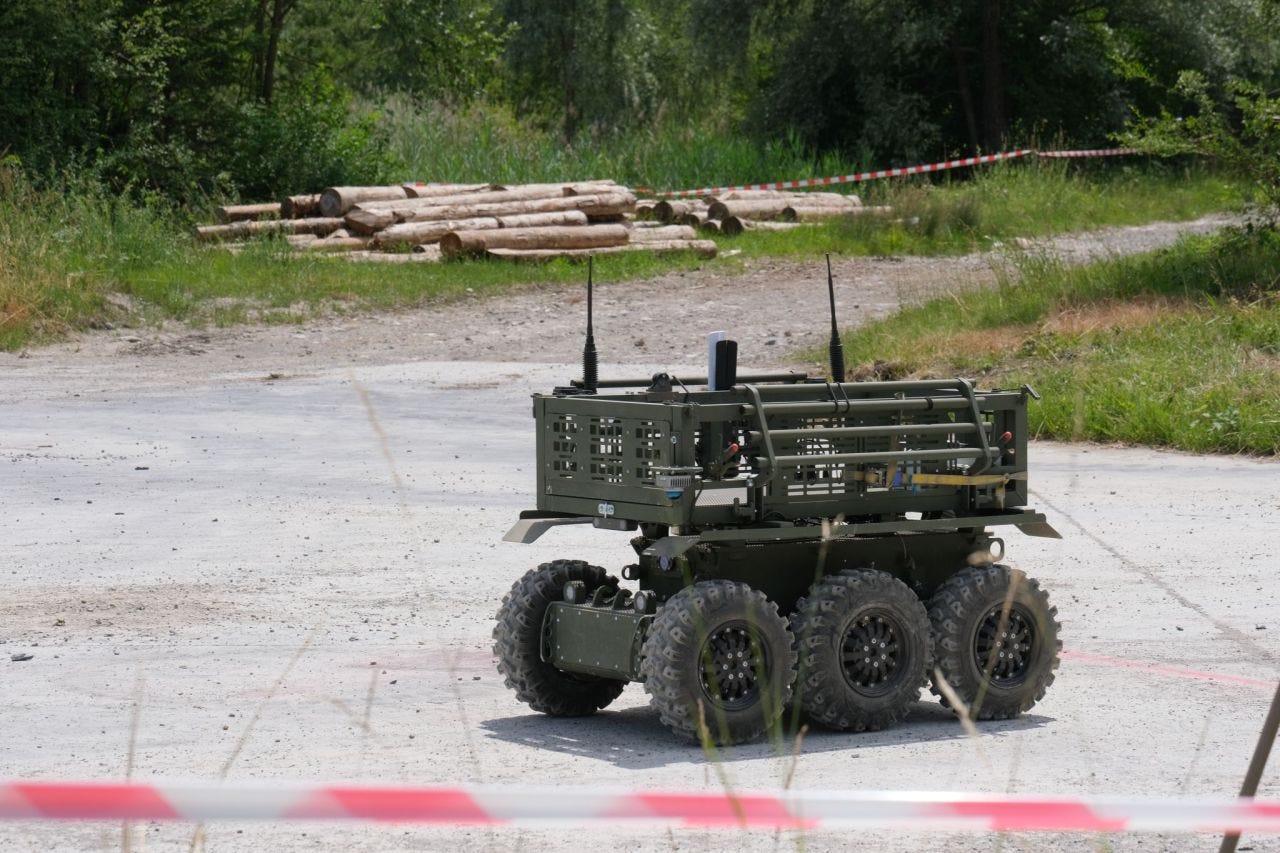
Their Head of Security Systems, Jakub Główka, said it directly after the event: ELROB is primarily about learning how to quickly adapt technology in real, demanding conditions — and that is its greatest value.
Prof. Roland Scherwey’s Team ROSAS from HES-SO Fribourg, running the GARM II platform from RUAG, experienced a critical motor driver hardware failure before their run even began.
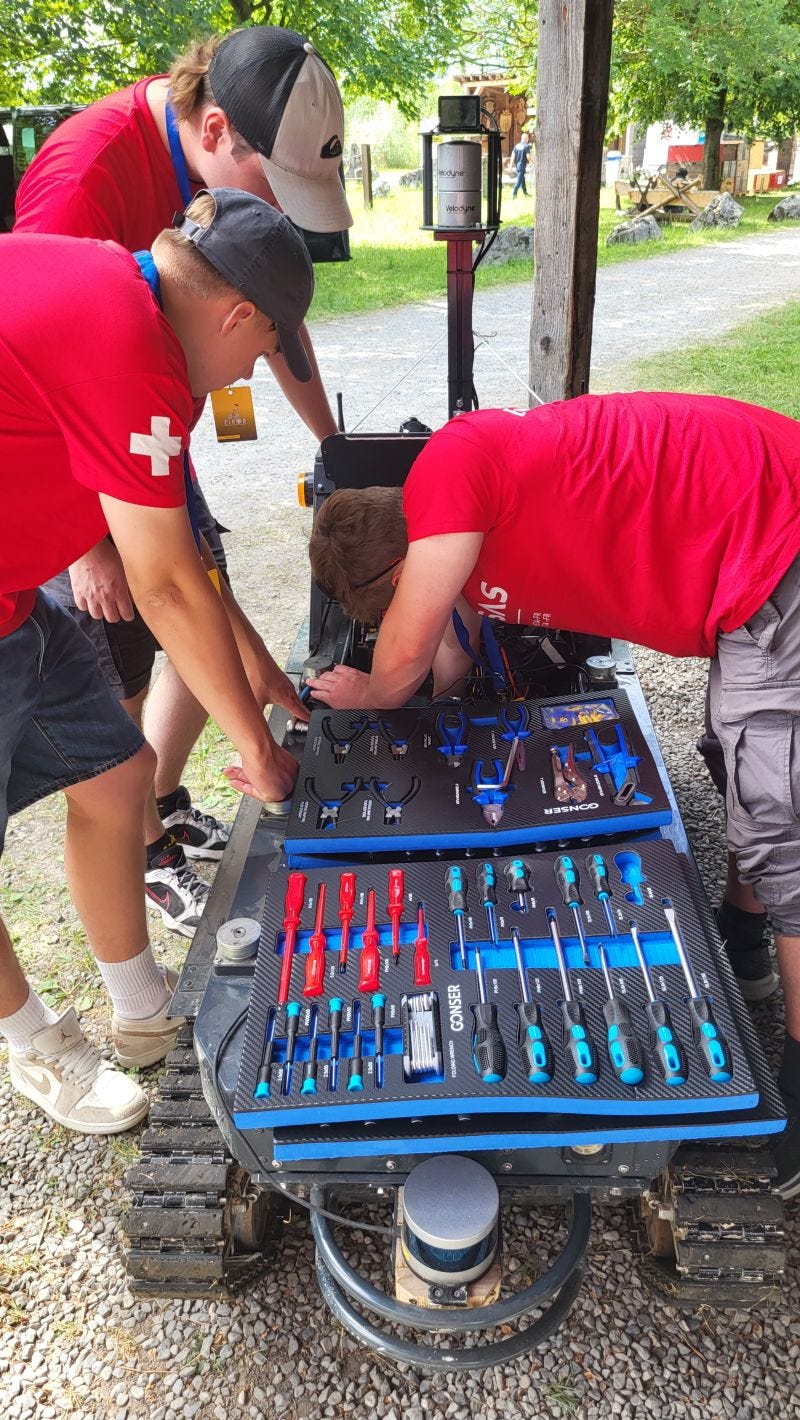
Half the team drove to Stuttgart overnight to source a replacement part. The other half stayed and prepared for an early-morning repair. Scherwey called it
“a bit like being part of a Formula 1 pit crew after an unexpected crash.”
They made it to the start line and completed most of the mission objectives.
Team Capra from École de technologie supérieure in Montréal — who had already had a rough week, with communication failures in the Search & Rescue round that required borrowed radio equipment from ELP just to re-enter — also competed in the Mule.
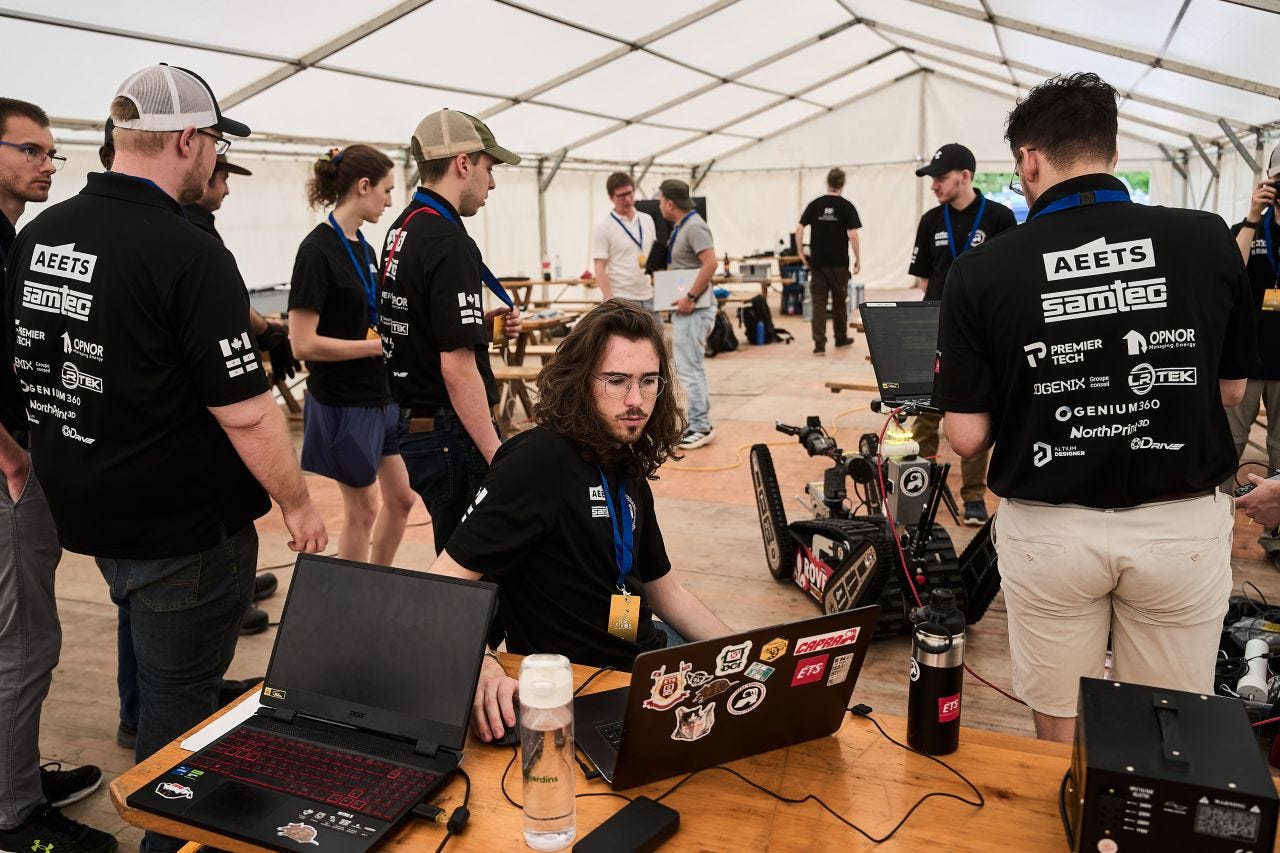
On the approximately 300-meter course, they didn’t complete all required tasks, but the jury noted their improvisational talent and team spirit. Étienne Le Guerrier, team boss, had said before the event that they had fundamentally revised the platform and were testing it under real conditions for the first time. That context matters when reading the results.
Rheinmetall’s video of Eleni Sabourin demonstrating the Mission Master SP’s follow-me capability through obstacles and tight terrain is worth watching directly. It’s a clean look at where that technology currently sits — capable, precise, and still guided by a skilled human in the loop.
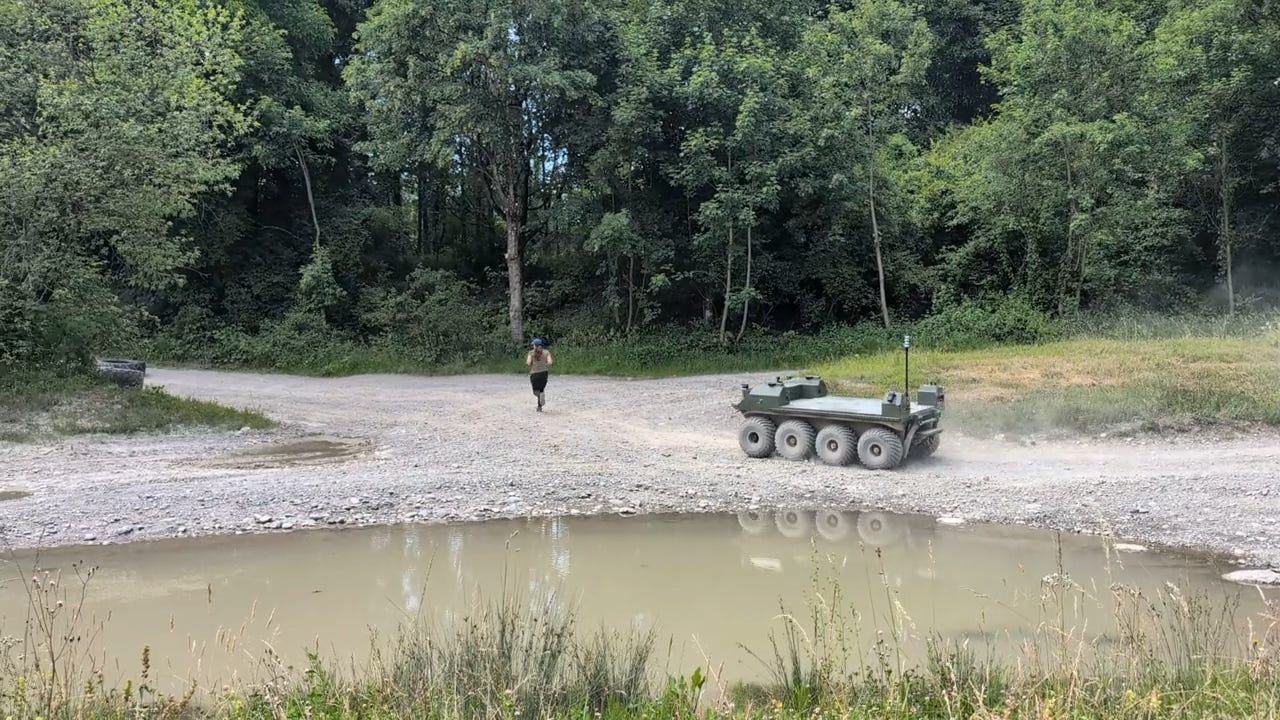
Watch here > Paul Rocco (Rheinmetall)'s LinkedIn post
A Question I’m Sitting With: Where Are the Turkish Teams?
While browsing through past ELROB photos, I noticed that Turkish teams have been there before. At ELROB 2024 in Trier, ITU RAKE — the Robotic Search and Rescue team from Istanbul Technical University — registered for the Search & Rescue scenario. In 2026, in Thun, they weren’t in the participant list.
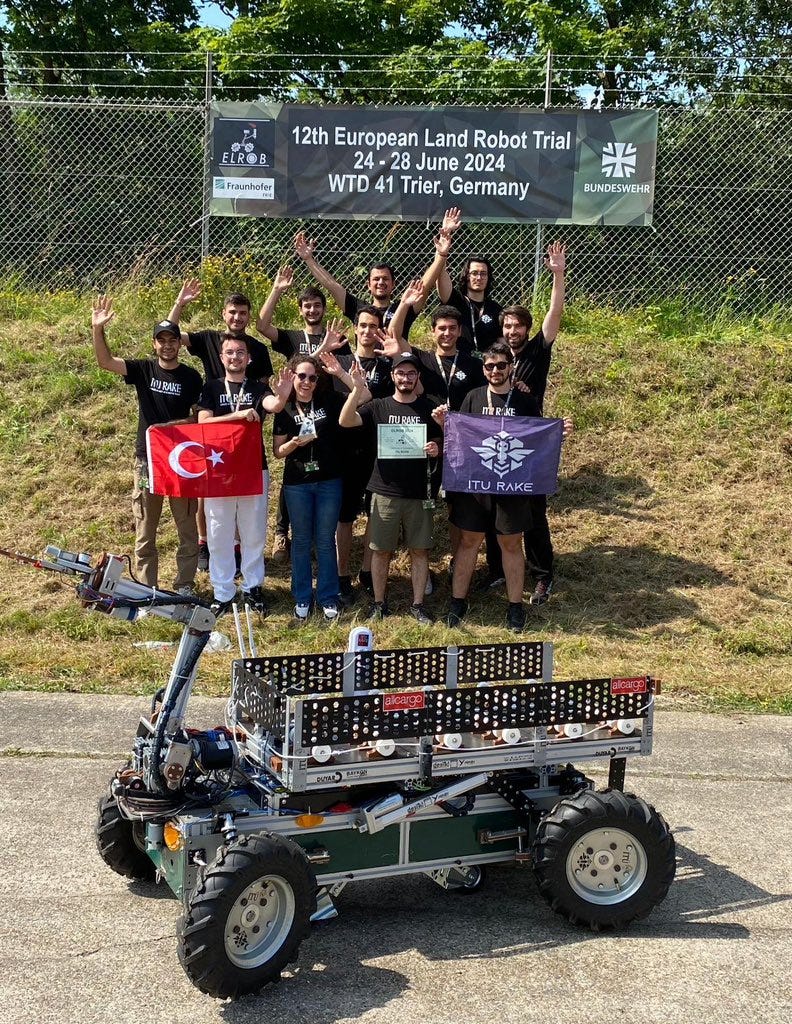
I’m genuinely curious why. Turkey has strong engineering universities, a growing defense robotics sector, and real institutional interest in unmanned systems. Is participation too expensive logistically for university teams traveling from outside Turkey? Is it an awareness and network gap — the word simply not traveling as easily? Something else entirely?
I don’t have the answer. But I’d like to find out.
This is also personal for me. At the company I co-founded once (now in the past), we sponsored Turkish autonomous systems student teams for years. Watching that community grow up close gave me a real appreciation for the talent and drive that exist there. If any Turkish team is looking to participate in events like ELROB and needs guidance, connections, or support to get there, I’d be genuinely glad to help.
ELROB and Its Sister Events
One thread worth pulling: ELROB and ENRICH are twin events that are run in an annual rotation by the same core team at Fraunhofer FKIE, led by Dr. Frank E. Schneider. While ELROB focuses on military field robotics in outdoor terrain, ENRICH (the European Robotics Hackathon) is held every two years at the Zwentendorf nuclear power plant in Austria — the only nuclear facility in the world built but never commissioned — and focuses on CBRNE scenarios: robots navigating radiation, mapping hazardous environments, and performing manipulation tasks in conditions no human should enter.
They are philosophically identical events: not competitions in the trophy sense, but performance comparisons that expose what works, what doesn’t, and what needs to be built. The next ENRICH is planned for 2027. If you are in this space and haven’t looked at it, you should.
And ELROB 2028? Austria. Dr. Schneider’s team is already thinking about it.
Closing
Twenty years ago, someone at a NATO workshop noticed a gap. Military robots existed in theory but failed badly in practice. A framework was proposed to bring users, researchers, and industry together regularly, in the field, under conditions that did not flatter anyone.
That framework is still running. In 2026, it drew 21 teams, including students from Montréal who flew 6,000 km, engineers who drove to Stuttgart at midnight for a motor driver, and a Boston Dynamics Spot that apparently performed flawlessly in 35°C heat and dust.
Looking forward to another edition of ELROB, already! Maybe I’ll bring a team to the next one 😏